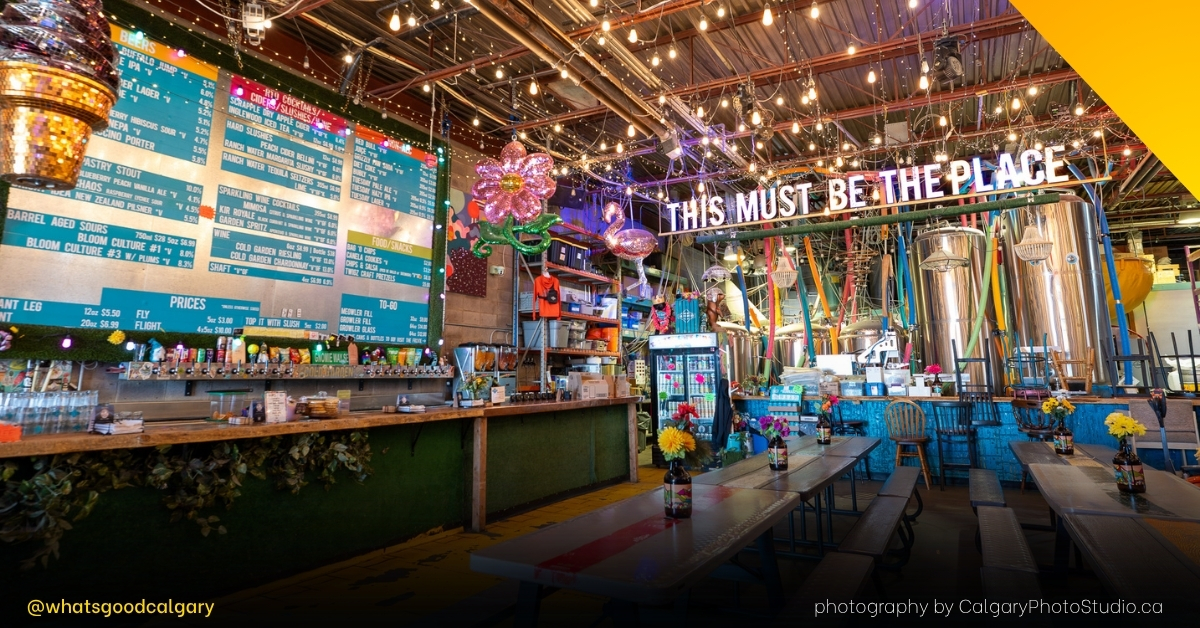
There’s a moment that happens to almost everyone the first time they walk into Cold Garden. They stop. They look up. They look around again. And then they do that involuntary laugh that says: Wait… what is this place?
Because it’s not “just another brewery.” It’s a funky living room for the city — the kind of space that feels like it was built for your group chat, your dog, your cousin’s engagement photos, and that random stranger you’ll end up talking to at the picnic table like you’ve known them for years. And somehow, it all makes sense. Even in winter.
While a lot of patios disappear the second the temperature drops, Cold Garden stays open year-round — and it’s weirdly beautiful when the snow is falling. There are fires going on weekends, heated domes, heaters under the awning, and that warm glow that makes you feel like you’re in a movie scene where the city is cold, but your table is cozy.
The owner says that even on the “desolate” days, if it’s -10 or warmer, there’s always someone out there.
That’s the thing about Cold Garden: it’s built for real life, not just peak-season highlights.
From house parties to a city “third place”
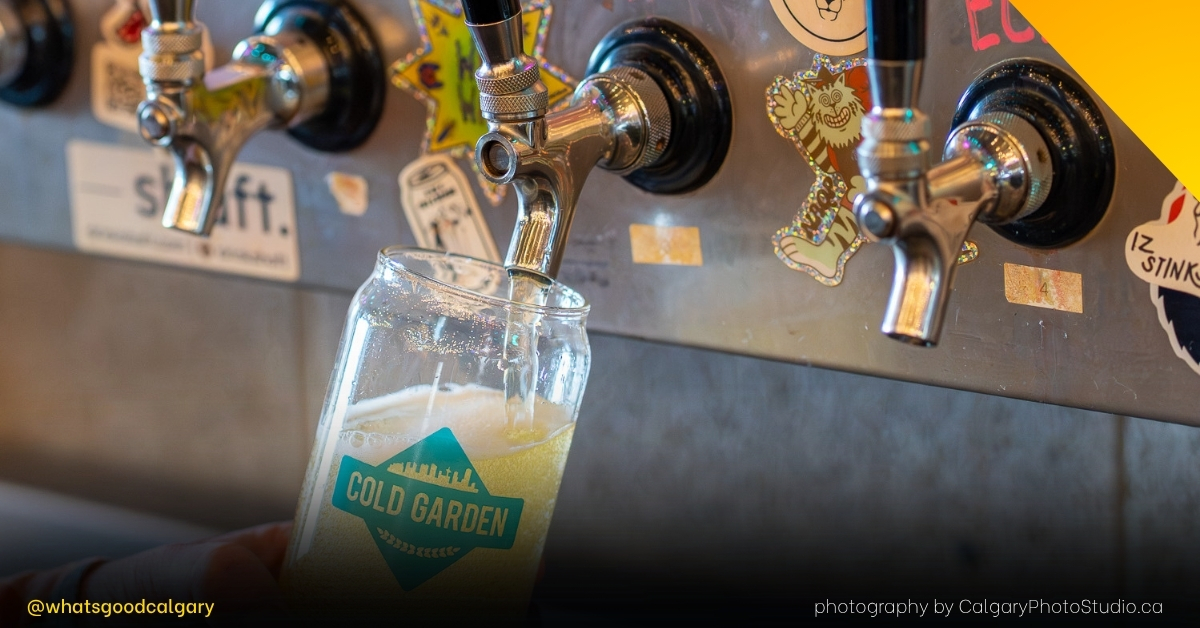
Before Cold Garden existed, one of the founders was working in commercial real estate. His business partner, Blake Belding, was brewing beer basically to drink cheaper. And somewhere around 3 a.m. at a party — the kind of party with the energy of a mini-festival — the rules in Alberta changed, opportunity cracked open, and a casual “do you want to do this with me?” turned into something that would become a Calgary institution.
The roots weren’t corporate. They were community. The founder describes himself as “the guy throwing 300-person house parties,” which… explains a lot. Because Cold Garden doesn’t just serve people — it hosts them. It’s designed with flow, comfort, and that unspoken permission to take up space.
They didn’t set out trying to be polished. In fact, the lack of polish was intentional — not laziness. The idea was simple: make a place where people check their egos at the door.
And that approachability became the foundation.
“Psychedelic grandma’s basement” (and it’s a compliment)
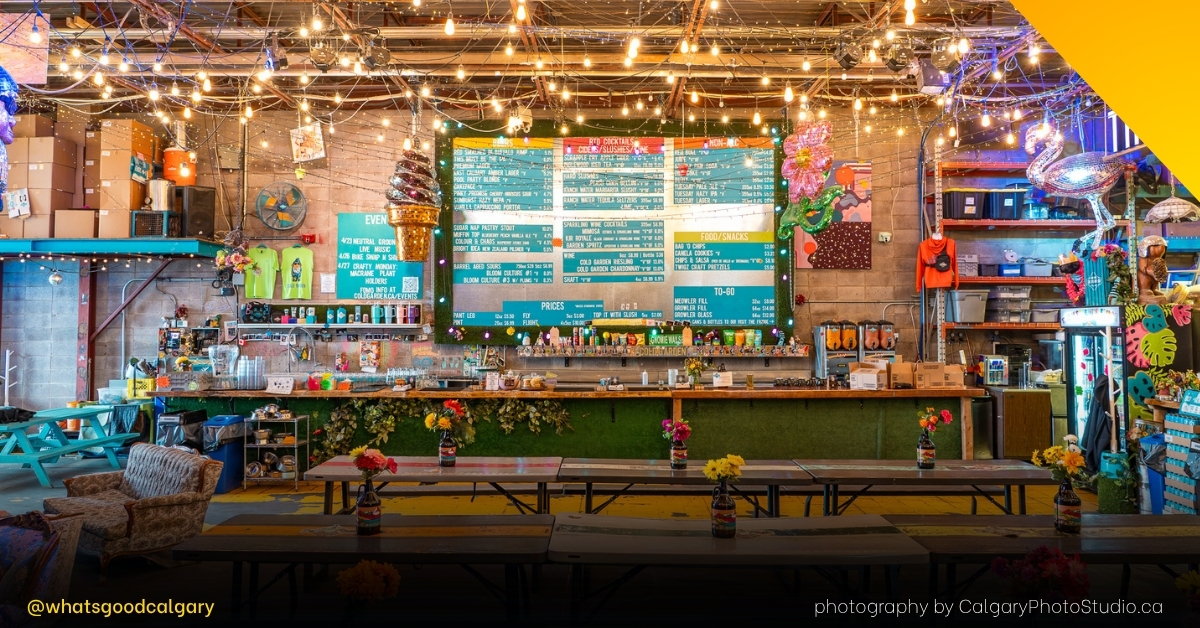
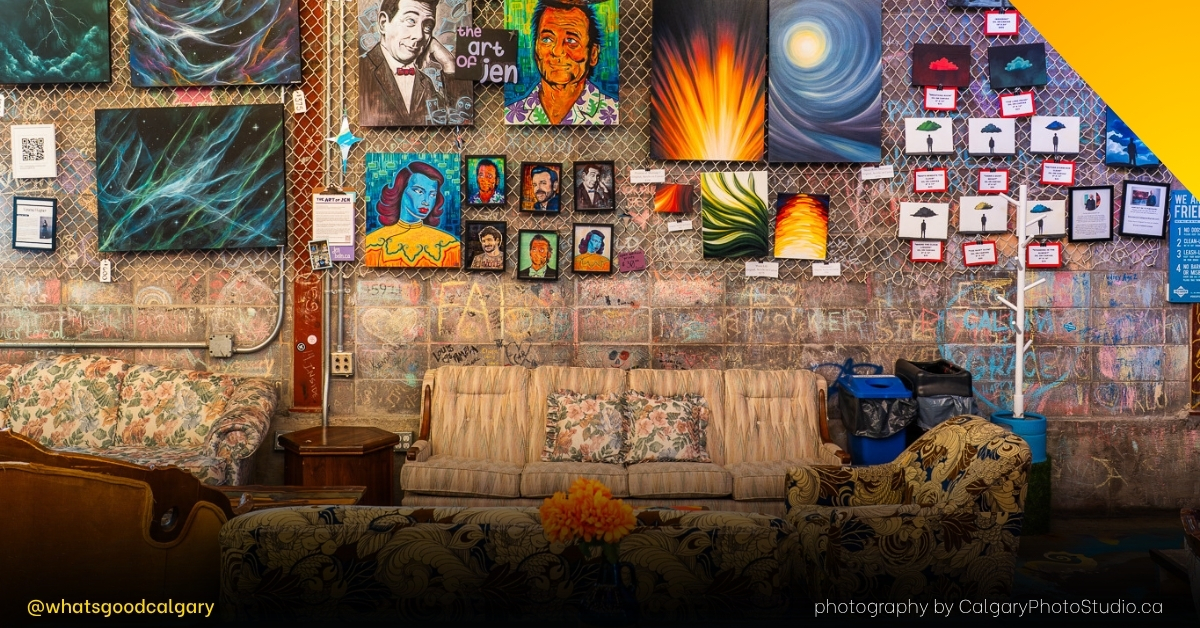
The décor didn’t start as a master plan. Early Cold Garden was basically a bare warehouse — no art on the walls, just a space where people felt comfortable enough to literally draw on the surfaces and leave their own mark.
Then the aesthetic grew the way good community things grow: organically. They built what they could with their own hands. They didn’t know the “restaurant way” of ordering furniture. They just needed places for people to sit, so they started thrifting couches. And then… the community started filling in the gaps.
Someone would notice they needed a coffee table and bring one. A local furniture importer donated a dramatic couch from Bali. Now, people donate pieces every week — and Cold Garden has become choosy, curating items that are floral, vintage, and efficiently weird in the best way. It’s like the whole neighbourhood became a co-designer.
And yes, it’s chaotic — but the founder says it’s a mirror of who he is: hard work, then celebration. A space that doesn’t pretend to be calm, but somehow still feels comforting. A perfect little contradiction: calm overstimulation.
The dog-friendly place that changed the rules
Cold Garden’s “dog brewery” identity started simply: the founder’s dogs were there while he was literally swinging a hammer during the build-out, and inspectors didn’t flag it. So dogs stayed. Then it escalated.
A competitor complained, and suddenly it became a national story — framed like a David vs. Goliath battle between a small business and the regulatory world. Behind the scenes, the founder says the inspectors were actually great to work with (and were dog owners themselves).
The issue wasn’t safety — it was that nobody had ever challenged the rules in a way that made sense for a closed, factory-style brewing environment. Cold Garden did the work. They walked inspectors through the process. They proved the safety. And they became the first place in Canada allowed to have dogs indoors.
Then they gave the proposal away for free so other businesses could do it too — helping at least a dozen places open their doors to dogs. That’s not just dog-friendly. That’s culture-shifting.
A love letter to Inglewood
Cold Garden didn’t land in Inglewood by accident. The founders wanted Inglewood or Ramsay for the character — for the village feel. They were small-town guys, and this neighbourhood still feels like a charming little pocket with a bit of grit. They didn’t want it polished. They wanted it dope… but not polished. And they didn’t just set up shop — they invested in the neighbourhood.
They helped build a park across the street (formerly a derelict field full of gopher holes) and turned it into something that adds actual vibrancy: a basketball court, community hang space, people roller skating, a mini ramp. It’s a “third place” outside the walls, too.
Even the building itself holds a story most people don’t know: it was built by a local entrepreneur, brick by brick, and Cold Garden’s founders were given a chance by the original owners who could’ve made more money renting it to someone who just wanted car storage. Instead, they took a risk on something meaningful — and when the builder was in hospice, he got to hear what his building became and smile.
That’s Cold Garden in one moment: turning a corner of Calgary into a living thing.
So what do people come for?
Ask the founder what brings people in — and it’s rarely the beer. It’s the vibes. The dogs. The feeling that you can wear whatever you want, take up space, and leave with a new friend.
Cold Garden is what happens when a brewery stops trying to be “a venue” and becomes a community habit.
A little chaotic, a little magical… and unmistakably Calgary.